For sites that already rank

Redesign your website with AI, without losing your rankings

Paste the current address. Eqlo reads the pages, the copy, and the images, then writes a first draft in two to five minutes. You keep the URLs that already earn, publish readable HTML, and write the redirect map before the switch. Rankings are not guaranteed. Free is $0 with one seat.

  • URLPaste the current site
  • 2 to 5 minFirst draft
  • 301Map before you switch
  • 1 weekCareful redesign
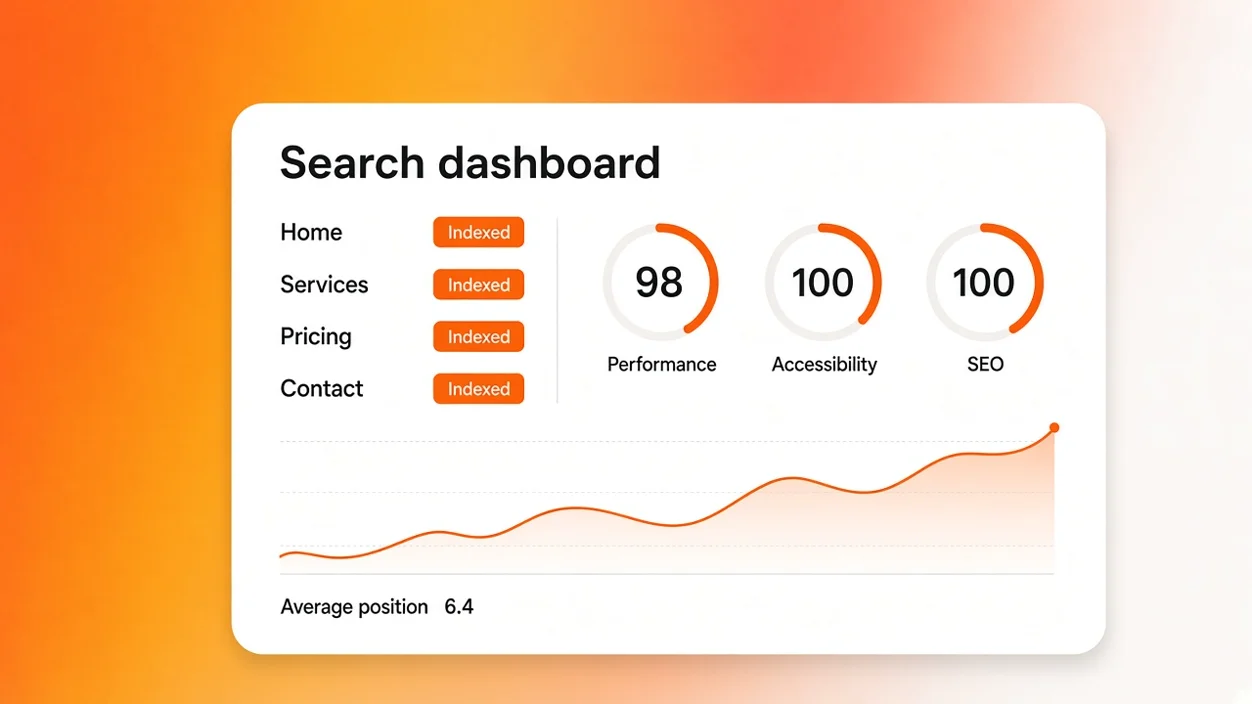
Publish board with a verified domain, a submitted sitemap, and performance scores
The Publish screen after a live deploy: a verified domain, a submitted sitemap, and Core Web Vitals, not only a green button.
What to keep, rewrite, or redirect when you redesign
KeepRewrite in EqloRedirect
A URL that still earns impressionsThe addressThe look and the HTMLOnly if you retire it
A title that already matches the queryThe contract with the queryTighten, do not brand it awayIf the page dies
A page the crawler sees as emptyNothing to keep in the shellPre-rendered HTMLNot a fix by itself
Reviews, photos, and named workThe files and the permissionNew frames, same proofIf you merge two pages
The hostname you already ownPoint it at the new projectPages on that hostA domain change is a second project

The table is a starting rule, not a promise of positions. Rankings then depend on the copy and on reputation. Nobody sells a slot in the results.

The four signs it is time to redesign

A redesign is worth the week when the current site blocks a change you can name, not when you are bored of a color. Four signs show up in the files, not in a mood.

The first HTML is empty

Open the page with JavaScript off, or read the first response. If the words are missing, a crawler already left. Eqlo pre-renders marketing pages at build time, so the title, the heading tree, and the structured data leave in the first HTML. A prettier shell that stays empty is a loss, even when the preview looks finished.

A price change takes a ticket

If a colleague cannot correct a sentence without a developer, the CMS is the product. In Eqlo you select the price and write the change, or you edit the sentence in place. Each exchange creates a version you can restore. A brochure you will republish is usually one to two hours after the first draft, not a sprint on a theme.

The phone gets a different, weaker site

A second theme for mobile that drops the form, the hours, or the proof is a reason to rebuild. Images in Eqlo become WebP, sized, with alt text. Core Web Vitals are measured on every publish, and a regression raises an alert. That does not buy a ranking. It stops a silent slide after the switch.

You need a new tree, and the old URLs still earn

A new information architecture is not a reason to invent new addresses for sport. List the URLs that still receive impressions before you sketch the new nav. The redesign is a mapping job first. Eqlo can start from the current site so the old tree is visible before you rewrite a heading.

What to recover from the old site

Before you paste the address into Eqlo, export the pages that already work. Three recoveries matter. Skip any of them and you are guessing on launch day.

The URLs that receive traffic

Export the addresses with impressions, including PDFs people still open. Those paths are the project, not the color of the header. Mark keep, merge, or retire on a sheet you can hand to someone else. A useful parent is better than a blanket send to Home. Eqlo can propose pages from the current tree, but it does not replace that sheet.

The copy that already ranks

A title that already matches a query is a contract. You can tighten it. You should not replace it with a brand line that names nothing. Pull the headings and the paragraphs that still bring the right people. Paste them into the chat or attach a PDF. Eqlo writes new frames around words you keep. Generation can be wrong, so read the titles before you publish.

The images and the reviews

Named work, prices, reviews you have permission to show, the team photo. A redesign that drops the evidence to look calmer will look calmer and convert less. Eqlo places the files, converts them to WebP, and writes alt text you can correct. Do not invent a reviewer name or a date. If a review must move with a retired URL, put it on the destination page the same day as the 301.

Start from the current site instead of a blank page

Eqlo accepts a description in natural language, and it also accepts an existing URL, a screenshot, a PDF, or an image. For a redesign, the URL is the right start. You paste the address of the live site. Eqlo reads the pages it can reach and proposes a first version with navigation, copy, forms, and image slots already placed.

The first draft lands in two to five minutes. Treat it as a reading of the current tree, not as a licence to publish. Walk the proposed pages against the sheet of URLs you exported. If a service page is missing, say so in the chat: "Keep /services/boilers as its own page, do not fold it into Home." Each exchange creates a version you can restore.

Hosting starts on a projet.eqlo.app subdomain, so you can compare old and new without touching DNS. When the map is ready, you point the existing hostname at the new project. Plus, at $19 a month with three seats, adds DNS checks and an SSL certificate in the Publish screen. The sitemap and robots.txt are generated, and the sitemap is submitted. A new domain is a separate decision. Do not change the hostname because the typeface changed.

The redirect plan, explained simply

A 301 tells a crawler, and a bookmark, that an address has moved for good. Eqlo publishes the new pages on the host you point. The map itself is still your job. We do not claim a silent redirect engine that guesses every old path. A very specific table may need a developer on the repository.

Why a 301

A 301 is the signal that the old URL and the new URL are the same resource going forward. A 404 on a path that still earns impressions is a choice, not a process. A temporary redirect is the wrong tool for a redesign you intend to keep. Write the map before launch day, on a sheet, not in a chat the week after.

How to build the correspondence

One old URL to one new URL where you can. A useful parent if you cannot. Never a blanket send of every retired path to Home. Include the pages Eqlo proposed from the import, and the pages you deliberately dropped. If two old services become one, both old addresses should point at that one. Hand the sheet to whoever can add the rules on the host or in the repo.

What you check after the switch

The same hour the new HTML goes live, open the ten URLs that earned the most. Each should 301 to the mapped page, or 200 if you kept the path. Read the first HTML: title, H1, and body should be present without waiting for a script. Confirm the sitemap was submitted. Core Web Vitals are measured on every Eqlo publish, and a regression raises an alert. Search Console still belongs to you. Positions can still move.

A one-week redesign calendar

This calendar is an assumption for a brochure of a few dozen URLs, not a promise. A store or a custom tool takes longer. Say so before you book the switch.

01

Monday, export and paste

Export the URLs with impressions. Paste the live address into Eqlo. Read the first draft against the sheet. Mark keep, merge, or retire. Do not touch DNS.

02

Tuesday, recover copy and files

Bring back the titles that work, the reviews you have permission to show, and the photos. Correct them in the chat or in place. Restore a version if a heading went too far.

03

Wednesday, write the map

Finish the one-to-one list. Name who will add the 301s. Publish a preview on projet.eqlo.app and walk it on a phone. Invite a reader seat if a colleague must comment.

04

Thursday, dry run

Place a test form submit. Check structured data and alt text. On Plus, prepare the DNS records without flipping them. Measure Core Web Vitals on the preview publish.

05

Friday, switch and watch

Point the existing hostname, wait for the SSL check, publish, and fire the 301s the same hour. Open the ten earning URLs. Keep the old host only if a rule still needs it. Do not change the domain name on the same day.

Frequently asked questions

Will I keep my rankings if I switch to Eqlo?

Nobody can promise that. You keep the conditions rankings need: the same URLs where they still fit, real HTML, titles that match the page, and redirects for what you retire. Positions still move with the query and the competition.

Can Eqlo start from my current site?

Yes. You give it the URL, a screenshot, or a PDF. It reads the pages and proposes a first version in two to five minutes. You still decide what to keep. The import is not a licence to publish blindly.

Should I change the domain at the same time?

Almost never. Treat a domain change as its own project with a full redirect map and a wait you can survive. Redesign the pages. Leave the hostname alone unless legal or a sale forces the change.

What if my current site is a JavaScript shell?

Then a redesign is also a chance to ship HTML a crawler can read. Check the page with JavaScript disabled. If you see a blank, the look was never the main problem. Eqlo pre-renders the marketing pages at build time.

How long should a careful redesign take?

The first Eqlo pass is two to five minutes. The map, the copy you keep, and the redirects are days. The calendar above assumes a brochure and one week. A store is about a half day to rebuild, plus the map. That is still shorter than a twelve-week agency rebuild, and it is the part that protects you.

Start from the current site. Publish the redirects with the new pages.

Five projects, one seat, no card. Plus is $19 a month when the existing domain should point at the new project.