
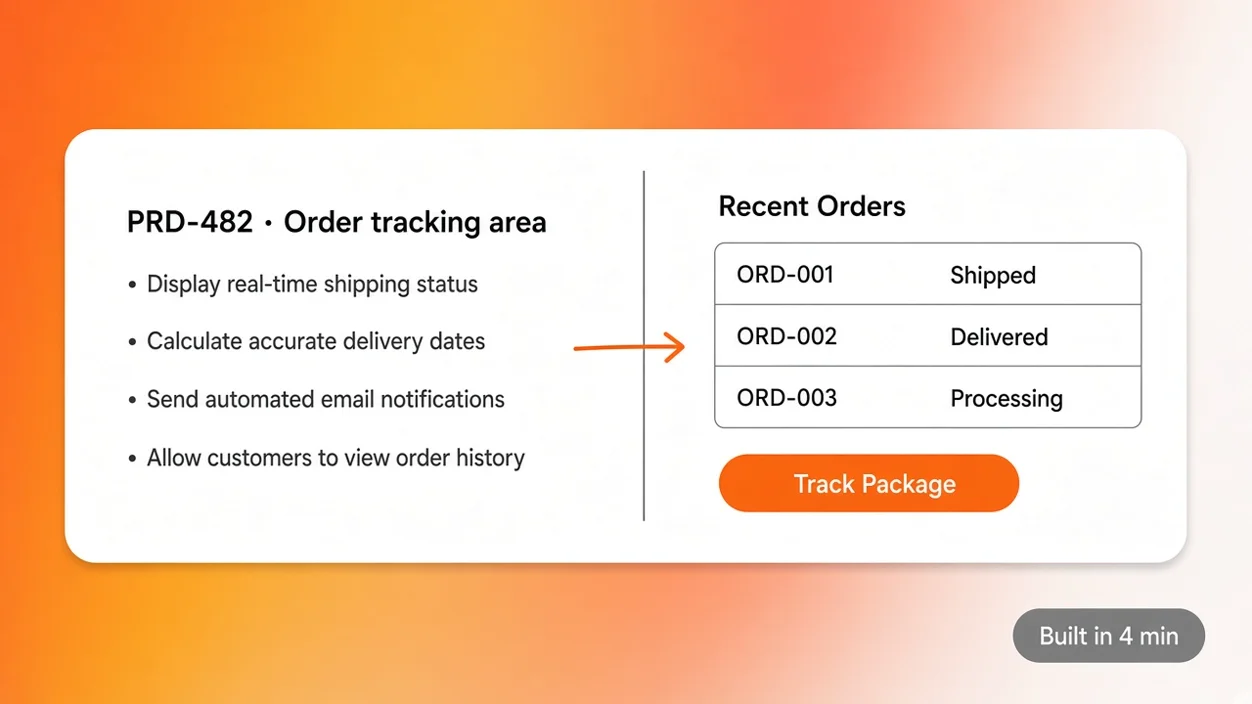
For product managers in a backlog week

For product managers, prototype instead of writing specs

A spec that nobody clicked is a preference. A prototype that five users failed is a fact. Eqlo turns a ticket into screens a stakeholder can reject this cycle. The import loop lives on the prototyping page. This page is the role: acceptance, the backlog, sign-off, and release. Five projects stay free, with no card.

  • 30 minPrototype from a ticket
  • 2 hTestable path
  • 1 hAcceptance screen
  • 5Free projects
A ticket with acceptance lines beside the matching clickable prototype
The ticket on the left, the prototype on the right. Each acceptance line either has a screen or it is parked.

What slows you down today

A backlog that debates the trade-off in comments

The ticket has twelve replies and no picture of the cut. Engineering estimates a wish. A stakeholder adds a fourteenth criterion in the thread. You need a version they can fail, not a better paragraph. A comment thread is not acceptance.

Acceptance that only exists as bullets

If a criterion has no screen, it was never acceptance. It was a hope you will discover at the demo. Mapping each line onto a state is the work. Doing that in a meeting is how a cycle dies. The acceptance screen is where the parked list becomes visible.

Stakeholders who nod, then reopen scope after build

A nod in a review is cheap. A click on a missing total is expensive in the useful way. Put a link in the invite and refuse to discuss a flow they have not opened. Sign-off is a person who clicked, not a sentence in the ticket.

What you can build yourself

A set a product manager can finish without booking a sprint. Times assume you already know the trade-off. The prototyping guide is the product loop.

About 30 minutes

A prototype from one ticket

Paste the ticket, two screenshots of the current tool, and the three criteria that are in. Eqlo proposes screens in two to five minutes. You delete the ones that were never the trade-off. Each exchange creates a version you can restore.

About 2 hours

A testable path

Sign in, the job, the empty state, a way back. Five people who do the work, twenty minutes each. They type, fail, go back. You fix the two notes that are true and ignore the ones that reopen the trade-off. Comments pin to the step.

About 1 hour

An acceptance screen

Each criterion either has a screen or it is parked. Parked is a decision. It is how you protect the budget. You send the stakeholder the link and a six-line note: what survived, what died, what waits. Engineering takes the repository when they want it.

A worked example

This is a worked example, not a named company. A product manager has a ticket, PRD-482, for an order tracking area three directors want and engineering has estimated at five weeks. One Thursday turns the trade-off into something they can kill. These four steps are that Thursday, not a second copy of the prototyping loop.

Ticket PRD-482 with in-scope lines beside a first prototype
  1. What is in: a table of orders, a status, an empty state, a way back. What is out: a CSV, a forecast, a second persona. The ticket and two screenshots of the current sheet go in. The full product document stays out. Eqlo proposes a first tree in a few minutes.

What you keep from your current tools

Keep Jira or Linear. Eqlo is not a backlog. Keep Figma for exploration, and the research tool if you run twenty interviews a month. The prototype is a way to fail a trade-off before it is estimated, not a second system of record.

The ticket stays the ticket

Paste a link back to PRD-482. When sign-off happens, write it on the ticket: what shipped, what waited, who said yes. The activity log on the project is a complement, not a replacement.

The design system stays the system

Point at the colors, type, and radius the team already agreed. A review about a new corner is a wasted stakeholder hour. Do not invent a brand in an order-tracking week. The designer page covers that handoff.

Engineering stays in the loop

Invite them to the five-user pass. They will see the empty state before they estimate it, and they will tell you when a click hides a join you cannot fake. From Plus, GitHub sync is automatic.

Where the autonomy stops and engineering takes over

Stop when the next question is a real feed, a permission model you already run, or a performance constraint you can name. A prototype that pretends to load 12,000 orders is a lie. A prototype that shows twelve is a conversation. Hand over the repository. Do not babysit a production board you were not staffed to own. You can force alignment. You cannot force a platform. A very specific trade will need a developer. Generation can be wrong, which is why restore exists.

Frequently asked questions

How is this different from the prototyping page?

Prototyping is the product: import, tokens, test, handoff. This page is the job around it: the trade-off, the five users, the stakeholder who reopens scope, the sign-off note. Use both. Do not paste one into the other.

Do I need five users every time?

You need enough people who do the job to fail the happy path. Five fits an afternoon. Two is a chat. If you cannot find five, you do not have a problem worth a cycle.

What if engineering refuses the generated screens?

They might. They will still have a flow testers already understood, and a list of what died. Invite them on Thursday, not at the demo. The files are React and TypeScript. From Plus, GitHub sync is automatic.

Can a stakeholder edit the prototype?

You decide the seat. A reader comments. An editor changes pages. An admin manages the project. A shared team login is how a draft becomes a second product overnight. Free is one seat. Plus is three. Team is ten.

Where does the budget conversation happen?

On the parked list. Every parked criterion is money you did not spend. Eqlo makes the first version cheap. Plus is $19 a month. It does not make a forecast free.

Cut the ticket. Put a link in front of five users this cycle.

Five free projects, one seat, no card. Sign-off is a person who clicked.