
For operations leads who still open a sheet at 6am

For operations, tools that follow your workflow

A sheet that runs the floor is a risk with a familiar filename. Eqlo turns the loop you already repeat into screens with an owner on each step. The internal tools page is the product view. This page is the ops week. Five projects stay free, with no card.

  • 3 hApproval chain
  • 4 hProduction tracking
  • 1 daySupplier portal
  • 10Seats on Team
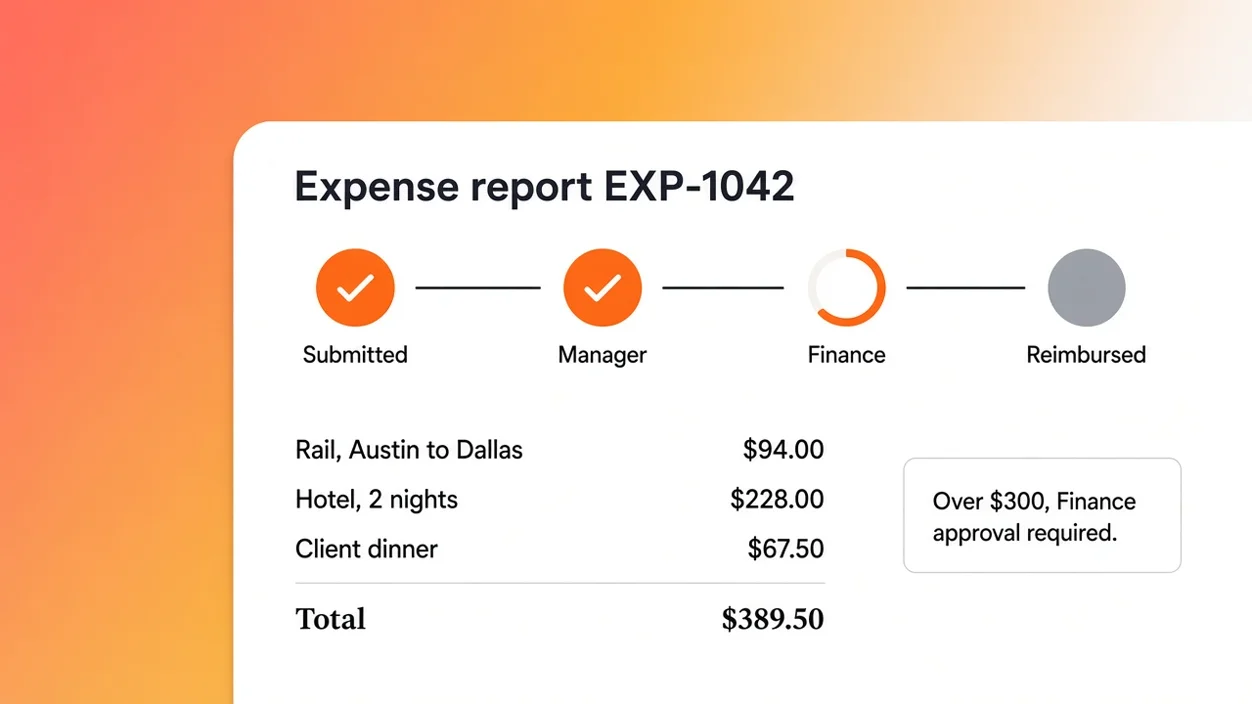
Expense report with a four-step approval chain and a named finance rule
A named owner on each step, a hold reason, a total a stakeholder can open.

What slows you down today

The live tab that two people edit at once

A shared sheet is fine until a night shift and a morning lead both type a status. One overwrites the other. The floor works from a copy. A tool has one row, one status, and a name on the next step. That is the trade-off you are buying: less flexibility, fewer silent collisions. Acceptance is a named yes on that row, not a color in a cell.

Systems that do not talk, so the sheet is the join

The pack line, the QA log, the carrier portal. None of them share a key. Someone retypes a batch code at 6am. Eqlo will not replace those systems. It will retire the sheet that sat between them, start from a CSV import, and say when a join is still a person. Honesty here is cheaper than a fake integration.

An approval chain that lives in a forward

Packed, then QA, then ship. In mail, that is a thread that dies when one person is off. On a screen, that is three named steps and a hold. A stakeholder who asks who signed this should get a log, not a search through chat. Reader, editor, and admin seats stop a viewer from moving a hold.

Worked example

A worked example

This is a worked example, not a named company. Take an 80-person company whose Monday board is still a sheet. Batch, line, seal check, and a column that says OK in four colors. Two sites edit it. One site prints it. An ops lead types production batches, packed then QA then ship, hold if the seal fails, owner is the shift lead. Eqlo proposes a submit from the line, a queue, and a status a packer can see on a phone. Four weeks of batch codes come in as a CSV. The carrier portal stays unconnected, and that gap is written on the project. In the first fortnight a few dozen batches move through the board. QA holds two for a failed seal. Both holds are visible to the morning lead without a call. The sheet becomes an export for the weekly review, not the system. Sign-off comes from the operations director after she opens a held batch and sees the name, the time, and the reason.

  • 80people in the company
  • 3 hto stand up the chain
  • 3named steps on every row
Approval chain on a production batch with a hold and a named owner
The sheet is now an export. The row lives on the board, with a name on the next step.

What you can build yourself

Times assume you already know the loop. If you do not, write the loop on paper first. The internal tools page lists the common shapes. Here they are timed for an ops week.

An approval chain, about 3 hours

Packed, QA, ship. Or request, lead, finance. About three hours once the rule is a sentence. Hold if the seal fails is a rule. Use your judgement is how a chain becomes a chat. Roles so the shift lead packs, QA holds or releases, and ship is a third seat. The activity log is the conversation a director will ask for later.

Production tracking, about 4 hours

Paste the headers you already have. Name the statuses. A first version in two to five minutes, then the afternoon for the fields the floor will actually type. Twelve true columns beat a warehouse schema you invent at midnight. CSV import for the codes you already hold. The floor will tell you which field was theatre.

A supplier portal, about 1 day

A login, a list of orders, a status a supplier can see, a file they can upload. Auth by email, or the company login you already pay for. Organizations if each supplier must see only their rows. A day, not a platform rewrite. Do not add a dashboard you will not open.

What you keep from your current tools

Eqlo is for the gap that never got a ticket, not for a second ERP. Keep the systems that already run the floor.

The pack line and the carrier stay where they are

Connect them later if an API exists. Often the honest first version is a CSV import and a named gap. Google Sheets can stay the Monday export. Slack can stay the place a hold is announced, once the row already exists on the board.

The identity you already pay for

Email, Google, or Apple sign-in. Invite by email. Reader, editor, and admin. When someone leaves, the seat leaves. A forwarded link is how a price list travels. Free is one seat. Plus is three. Team is ten.

The weekly review file, as an export

The sheet can live as a CSV export. That is how you retire it without a speech. The source of truth moves. The habit of a Monday file can follow later. Release is the moment the row is created in the tool, not the moment you hide a tab.

Frequently asked questions

Is this the same as the internal tools page?

Same editor. Different job. Internal tools is the product: approvals, directories, sign-in, the general case. This page is the ops week on a floor: the sheet, the chain, production tracking, the sign-off a director can open. Link out. Do not paste one into the other.

Can it talk to the pack line and the carrier?

Sometimes, through the connections you enable. Stripe, Google Sheets, Slack, and the others on the integrations list. Often the honest first version is an import and a named gap. Write the gap on the project so a stakeholder does not think the join exists.

Do I need engineering in week one?

No. You need a loop you can describe and someone who owns the first board. Engineering comes in when the next constraint is a system they already run, or when the repository must sit in your pipeline. Until then, correct the statuses and the hold reasons.

What happens to the sheet on day one?

It becomes an export, or it stays as a parallel for a fortnight while the floor learns the board. Do not delete it on the morning you publish. Do not let it remain the place people type. A release is the moment the row is created in the tool.

How do I talk about budget?

Free is $0, one seat, five projects. Plus is $19 a month and three seats. Team is $49 a month and ten seats. Count the seats who must act, not everyone who might look. A reader seat for a director is cheaper than a weekly meeting to reconstruct a hold. If a vendor already does the job, keep them.

Describe the loop. Put a name on each step this cycle.

Five free projects, one seat, no card. The repository is yours when a join needs engineering.