
For product teams

Build a working prototype with AI, in hours instead of weeks

You start from a ticket, a written spec, a frozen mockup, or a screenshot of what exists today. Eqlo turns that file into screens a colleague can click and comment on. The first draft lands in two to five minutes. You share a link the same day, then hand React components to engineering.

Abstract illustration of a mockup, a clickable prototype, and a proof of concept
Three objects on one scale: a still mockup, a prototype you can click, and a thin slice on real data.

Start from what is already written

A ticket or a specification

You start from what is already written, not from a blank prompt. Upload the PDF, the ticket, or the outline sitting in the backlog. You can also paste a URL or drop a screenshot. Eqlo reads acceptance lines as screens. Order tracking becomes a header, a table, and a status. You do not retype the document for sport. The first draft lands in two to five minutes. Take this as a worked example, not a named client. A product manager with a Thursday ticket can put something clickable in front of three directors before lunch.
A frozen mockup

A static frame is a starting point, not a destination. Import it and say which parts must work. The prototype keeps the structure and fills the interactions the mockup only implied: empty, error, loading, back. Colors, type, and corner radii then apply to every screen at once. You click an element and write an instruction that changes only that element. Each exchange creates a version you can restore.

A screenshot of what already exists

A capture of the current tool is enough when the spec is thin. Eqlo uses it as input the same way it uses an image or a PDF. You still have to say what is in scope. The upload is not a substitute for a decision. Comments later pin to the spot they are about, so a stakeholder marks the missing total on the screen, not in a side document.

The four moves, from the document to a shareable link

The four moves, from the document to a shareable link, stay short on purpose. A prototype that takes a fortnight is a small project, and it will be defended like one.

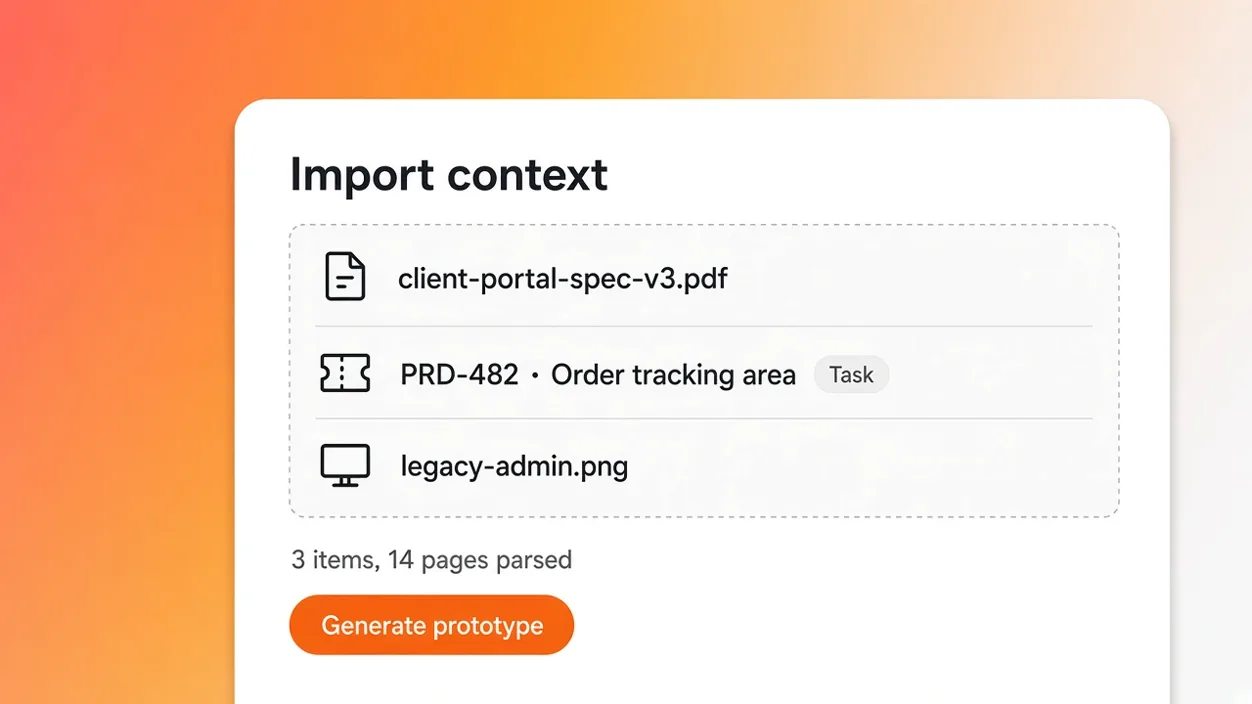
Import panel with a spec PDF, a ticket, and a screenshot of the current tool
The import screen: a specification PDF, a ticket, and a capture of the current tool, counted before you generate.
  1. You drop the spec, the ticket, and any screenshot of the current tool. Eqlo writes React and TypeScript screens without a sprint booking. The first draft lands in two to five minutes. You read it the way a stranger would. If a screen is missing, say so in the chat. If a label sounds like a specification, rewrite it in the sentence you would send in a group thread.

Mockup, prototype, and proof of concept

What a mockup, a prototype, and a proof of concept each show, what they hide, and when to use them
MockupPrototypeProof of concept
What it showsHow a screen looks, and the order of blocksA flow a person can click, type, and failA thin slice that runs on real data
What it does not showWhether the flow survives a humanA production service, or a finished APIA polished interface kit
When to use itA design review about hierarchyA meeting that must accept or kill a flowA decision about a risky integration

What this changes in a product cycle

Validate before you commit a quarter

What this changes in a product cycle is the moment you say no. You can reject a flow before it is estimated for a quarter. A stakeholder who clicked the empty state has an opinion worth hearing. A stakeholder who nodded at a deck has a preference they will revise after build. The first draft lands in two to five minutes. The rest of the morning is for reading and cutting.

Decide in the meeting

You open the link in the room. People click. Comments pin to the element they dispute. Reader, editor, and admin roles stop a guest from publishing by accident. You restore a version if the last change confused everyone. The meeting ends with a keep, a cut, or a rewrite of one screen, not with a new document to schedule.

Price a request before you promise it

A criterion that has no screen was never acceptance. It was a wish. You see that on Tuesday, not at the demo. You then know what to quote, keep, or send back. Eqlo is not a way to sneak a full rewrite past a roadmap review. A very specific trade will still need a developer to take over after the prototype.

From prototype to product

From prototype to product, you keep the screens testers already understood, the tokens, the routes, and the Postgres schema. You rewrite what was theatrical, and you connect the real API. The files are React, TypeScript, and Tailwind on the web, React Native if the same project also ships an app. GitHub sync from Plus keeps the repository ordinary. A full export is available at any time. If the idea dies, you spent hours, not a quarter. Generation can be wrong, which is why history and review exist. Critical systems, a proprietary bank payment, or a regulated health file are not the target.

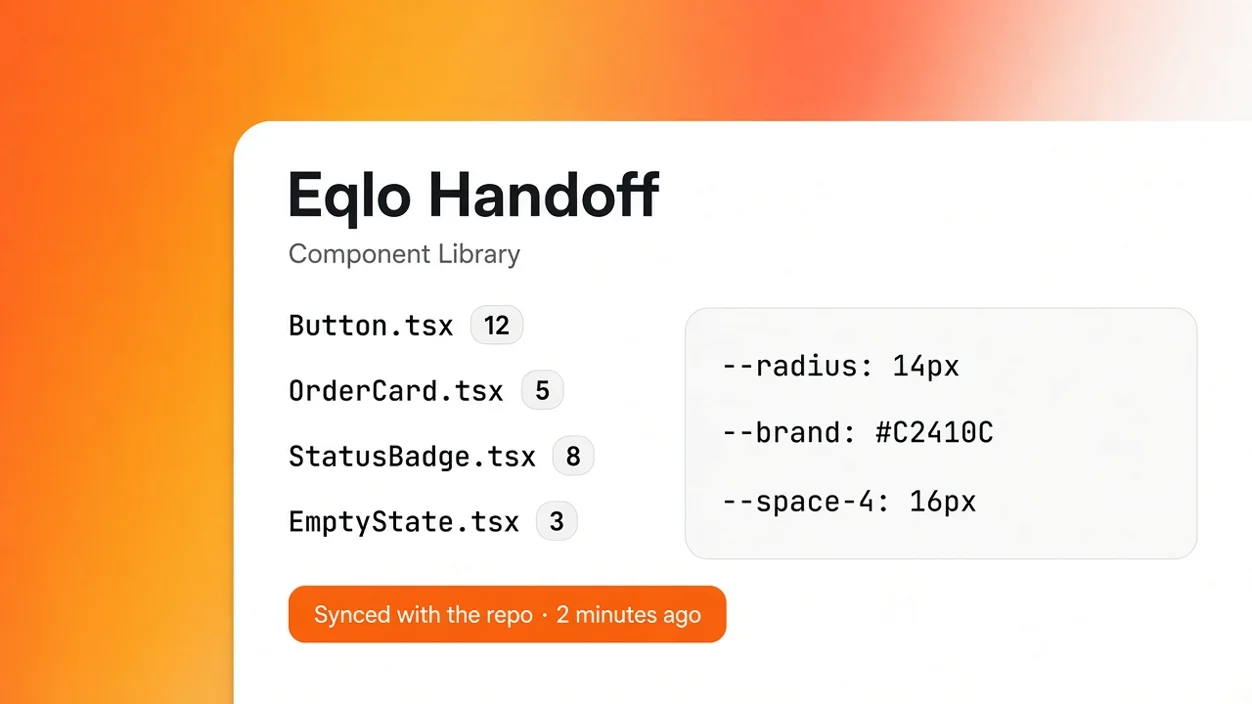
Generated TypeScript components and tokens ready for a developer handoff
What engineering opens: StatusBadge, EmptyState, and tokens, in files another developer can read.

Frequently asked questions

How is this different from a Figma prototype?

A Figma prototype is still a picture of the product, with hotspots. An Eqlo prototype is running screens with React and TypeScript components. Testers type, fail, and go back. Developers open a repository, not a mirror of rectangles. You can keep Figma for exploration. Use Eqlo when the question is whether the flow survives a human.

Can I start from a PDF spec?

Yes. Import the PDF, a ticket, a URL, or a screenshot of the current tool. Eqlo proposes screens from the acceptance lines. You still have to say which parts are in scope. The upload is not a substitute for a decision. The first draft lands in two to five minutes.

Will developers reuse the prototype code?

Often yes, because it is ordinary React and TypeScript. They throw away anything theatrical and keep the structure testers already learned. Sometimes they rewrite a screen. That is still cheaper than discovering the flow was wrong after a sprint. GitHub sync from Plus keeps the files in a repository they already know.

How do I collect tester comments?

You share the link. Comments pin to an element on the screen. You invite people by email as reader, editor, or admin. You see the activity log. There is no separate research tool to provision for a five-person pass.

How long before I can share a link?

The first draft lands in two to five minutes. Sharing is a button on a projet.eqlo.app subdomain. The time you spend after that is reading, cutting, and applying the colors you already agreed. Hours, not weeks, is the honest range for a flow you are willing to put in a meeting.

Does Eqlo replace a design system?

No. If you have one, the prototype should wear it. Colors, type, and corner radii apply to every screen at once. If you do not have a system yet, Eqlo starts from a small token set you can replace. A prototype is a bad place to invent a brand.

Drop the spec and share a link today

Five projects, one seat, no card. Plus is $19 a month when you want three seats or automatic GitHub sync.

Create your account

Five free projects. No card. About a minute.