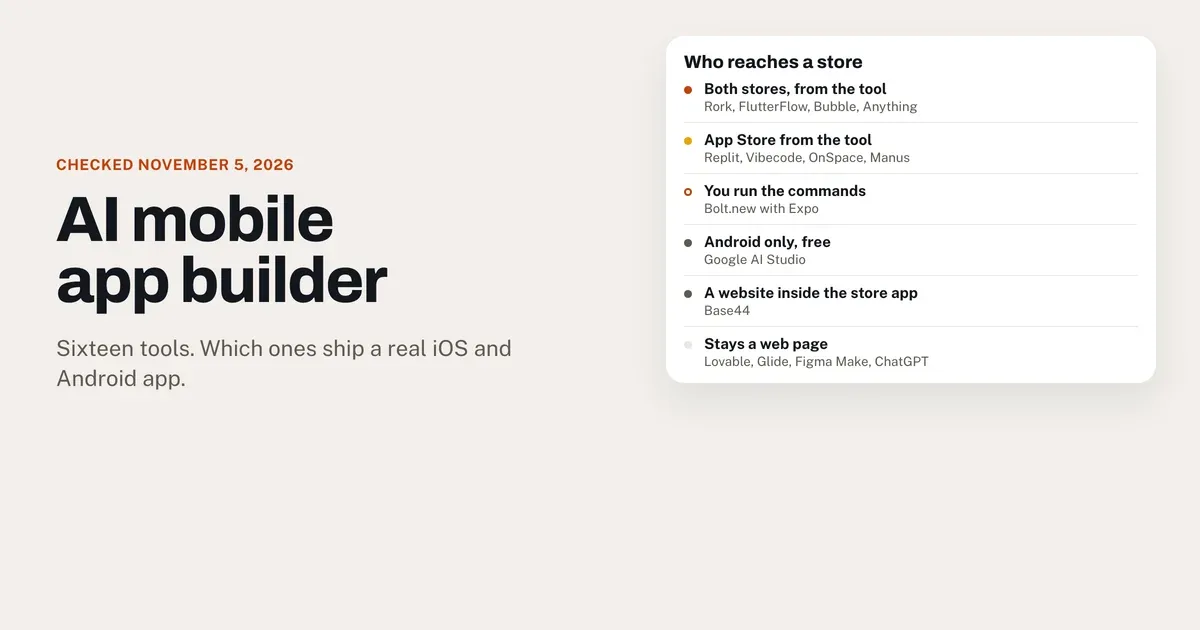
AI mobile app builder: which tools ship a real iOS and Android app
Sixteen AI mobile app builders, checked on November 5, 2026. Rork, FlutterFlow, Bubble and Anything send a native app to both stores. Lovable, Glide and ChatGPT stay a web page.


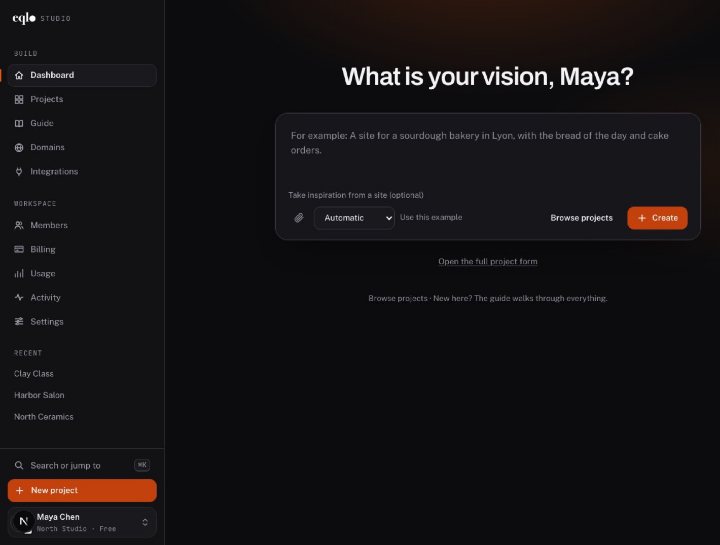
Create, edit and publish, then run your website and your app from their own dashboard. Every feature shown in real screenshots.
See the features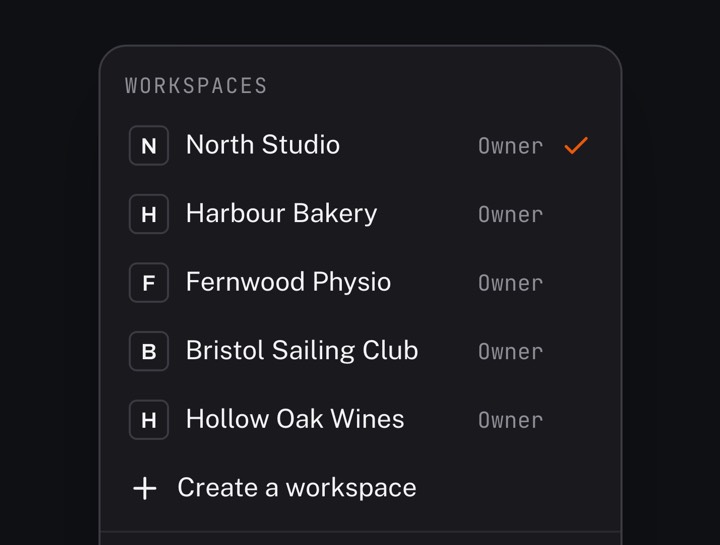
A Next.js project in React and TypeScript, sent to your GitHub repository. A spec change made in the repository comes back to Eqlo.
See the developer page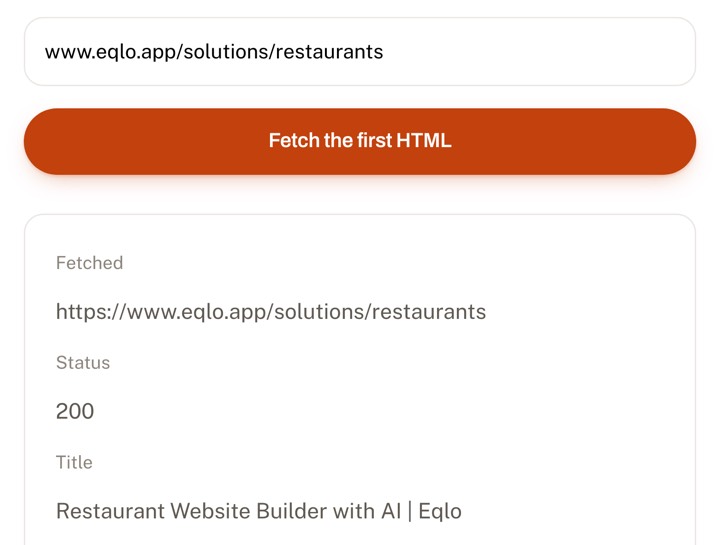
Paste a URL. In thirty seconds you see exactly what Google receives before any JavaScript runs.
Check a URL
I built Eqlo so that anyone, from a local shop to a nonprofit, can have a quality website and mobile app without knowing how to code. I put into it everything that years of web development and search optimization have taught me.
LinkedIn profileI'm a full stack web developer: I build a site's interface as well as its server and database. I did this work for many years for large companies, and as a freelancer for my own clients.
My expertise brings together two crafts that rarely talk to each other: code and search. SEO gets a site into Google, and GEO gets it cited in the answers of ChatGPT, Perplexity or Gemini. That combination is what let me launch Eqlo.
A fast website that is built for Google and easy to run should not be reserved for companies with a technical team. That is why I launched Eqlo: you describe your project in one sentence, the AI builds the website or the mobile app, and Eqlo hosts it.
Each site gets its own admin to track orders, bookings, requests and members. The app can be tested on a phone with a simple link, then published to the App Store and Google Play on a paid plan.
So that as many people as possible can benefit, the Free plan lets you run five projects without a credit card. And the code stays yours: it can be exported on every plan.
From the start, I chose not to let the AI write page code directly. It produces a structured description of the site, and a compiler turns it into pages with the same rules every time. Published pages therefore contain their text, headings and tags from the very first load, which makes them readable by Google and by AI engines alike.
What a search-minded developer would check by hand is automatic here: structured data, a sitemap, an llms.txt file for AI engines, lightweight images. Checks also block publishing when a page does not have exactly one H1 or an image has no description.
The exported code is a complete Next.js project, in React and TypeScript. Next.js is the technology I work with every day, and the one Eqlo itself is built on.
Sixteen AI mobile app builders, checked on November 5, 2026. Rork, FlutterFlow, Bubble and Anything send a native app to both stores. Lovable, Glide and ChatGPT stay a web page.
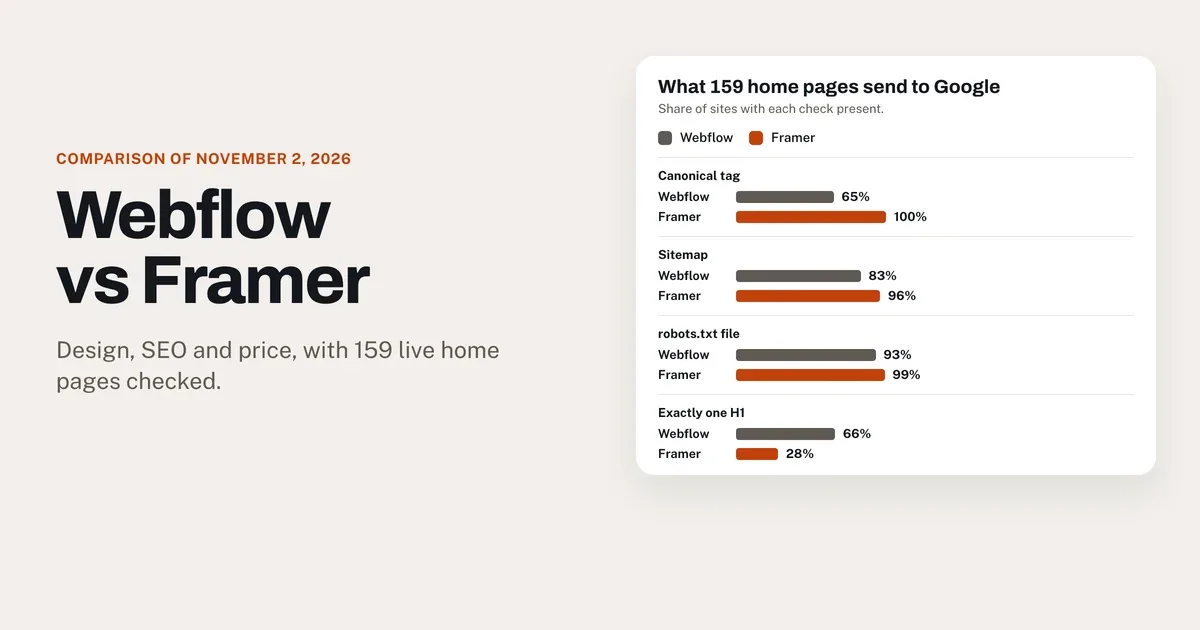
We checked 159 live Webflow and Framer home pages and priced three sites over 12 months. Framer wins on small design-led sites; Webflow wins as a site grows.
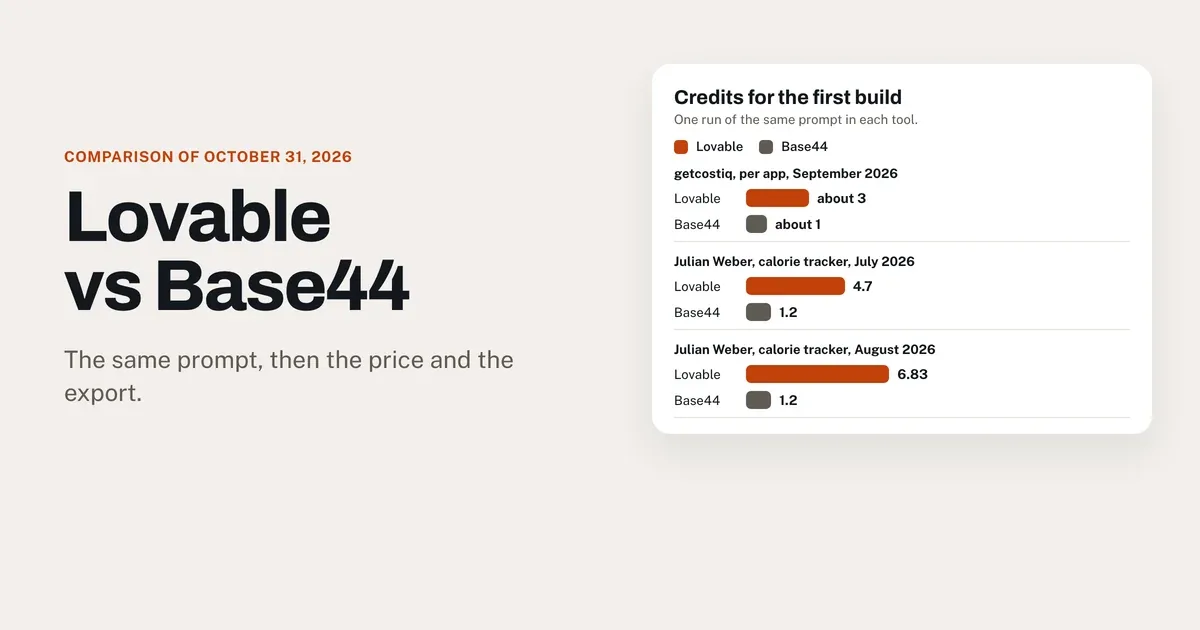
Ten published tests gave Lovable and Base44 the same prompt. Base44 finished the first version first in every timed test. Lovable syncs the code to GitHub on every plan, including Free.
I tested both Hostinger AI Builder modes, then the renewal. Premium is $119.52 for four years and $527.52 for the next four, before tax. Manual mode fits a brochure site. Agentic mode bills every message.

I spent a month on Framer with a six-page site. The first draft took half an hour, Basic was $15, and buying credits brought the month to $45, the price of Pro. What that month showed, and when Wix fits better.

Base44 builds a working first app in minutes. This dated review covers what Builder really costs at $50 a month, why credits can only be topped up by upgrading, and which parts of your app an export leaves on Base44.

Four published tests timed the same brief in Lovable and in Replit. Lovable reached a working app first every time. The year-one bill then depends on how each tool charges the fixes.

Replit Agent review from public evidence: published build times, what credits cost on October 19, 2026, what 120 recent Trustpilot reviews complain about, and what search engines see on replit.app apps.
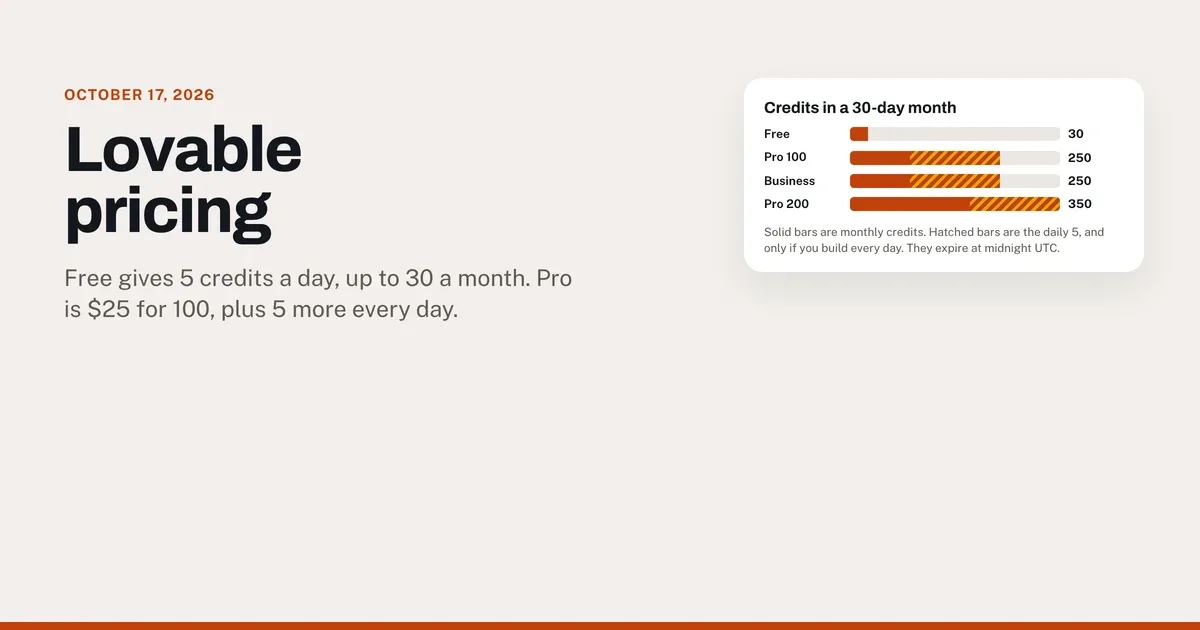
Lovable pricing on October 17, 2026: Free, Pro at $25 and Business at $50, 5 free credits a day, and what published projects actually used.
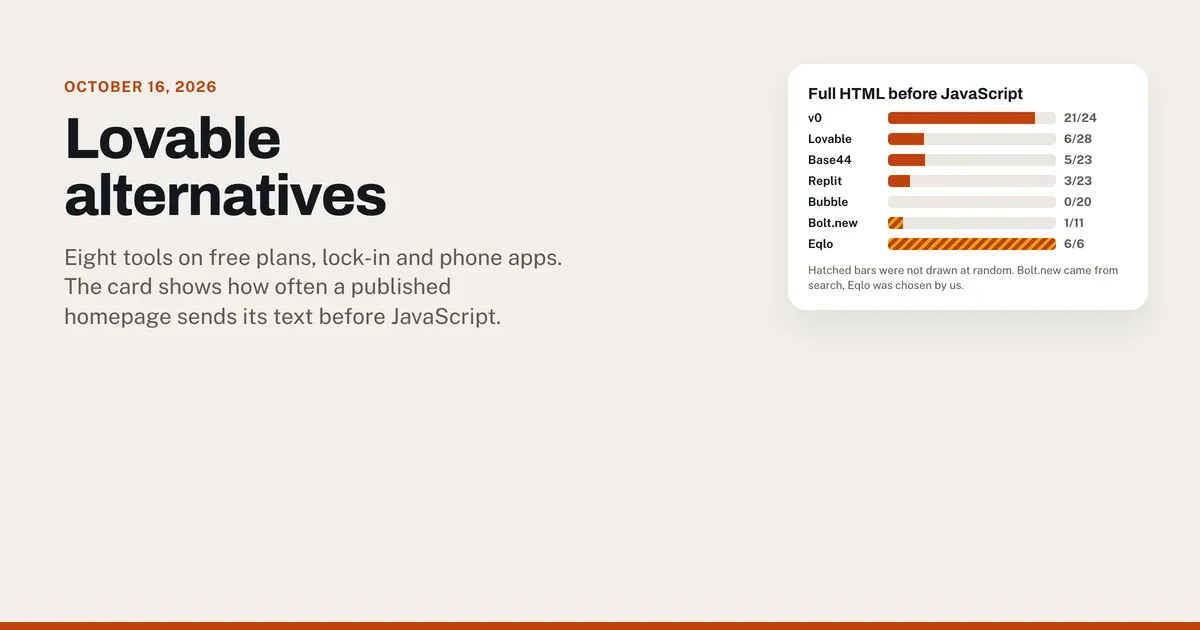
Eight Lovable alternatives checked on free plans, first-month cost, lock-in and phone apps. Also, what Google receives from apps already published with these tools, measured on October 16, 2026.

We built a booking app for a yoga studio in Lyon with Bolt.new, from first prompt to live Stripe payments in seven days. Tokens per phase, code quality, plan costs and who Bolt fits.

I built a plumber's website and a baby products store in Lovable and in Eqlo on October 15, 2026. Lovable was about 30 seconds faster and stays the pick for complex apps. For a small business site, here's what Google receives, what the credits cost and what Shopify adds.